Galleries 0
Collections 0
Groups 0
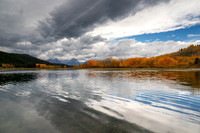
The Tetons rise majestically from the grasslands surrounding the Snake River meandering through the valley below, offering stunning views of granite peaks that stretch north of Jackson, Wyoming. The absence of foothills means that the Teton mountain range rises abruptly from the valley, providing one of the most awe-inspiring panoramas in North America. Grand Teton National Park encompasses these mountains and the wide valley below, preserving a diverse ecosystem filled with mountain meadows, deep blue lakes, rushing streams and waterfalls, and habitat for a wide range of fauna and flora. Wildlife includes moose, elk, deer, bears, wolves, fox, eagles and many other wild animals and birds. Trees and shrubs abound in coniferous forests with lodgepole pine, Douglas fir, spruce, and quaking aspen; riparian areas with cottonwood and willow growing along streams and streams; and lowlands with sagebrush, bitterbush, and grasses. Wildflowers are abundant throughout the summer, including lupine, larkspur, paintbrush, fireweed, and columbine.
Grand Teton National Park was established in 1929 and expanded in later years to a total of 310,000 acres. The Tetons have a rich history that goes back over 10,000 years, with Indigenous Peoples using the land for hunting bison, elk, and moose, and for gathering plants, berries, and roots. The Shoshone used the Native word teewinot to describe the range’s “many pinnacles.” As is the case with most national parks in North America, the establishment of Grand Teton National Park resulted in displacement and dispossession for the original inhabitants. Several indigenous groups have strong spiritual ties to the mountains and valleys, which continue to hold importance for Eastern Shoshone and Northern Arapaho. The National Park Service and the Grand Teton National Park Foundation collaborate with associated tribes on land stewardship and protection of cultural site, as well as youth programs and leadership development programs.
In early October 2025 we enjoyed a week in the Tetons, basing our stay at Signal Mountain Lodge. Autumn colors are at their peak in late September and early October, and the weather is mild, although this is a transitional season, bringing the likelihood of rain and snow. Most Services (including nearly all lodging inside the park) close by the first of October, which helps reduce (but not eliminate) the usual crowds. Although the color was no longer at its height during our visit, and the weather was variable, it was a magical time to be in the Tetons.
Views
55 photos
Hiking Trails
124 photos

Moonlight
10 photos

© Sustaining Images, All Rights Reserved