44 photos
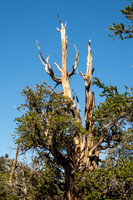
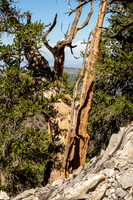
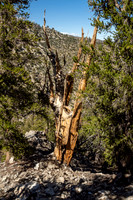
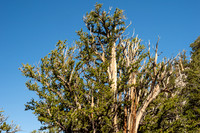
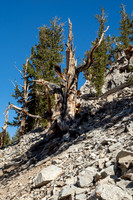
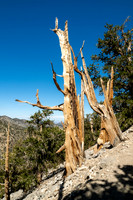
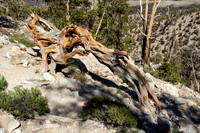
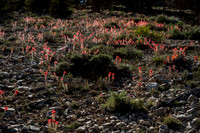
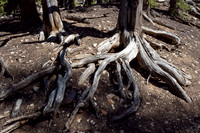
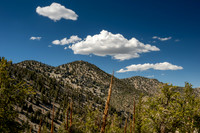
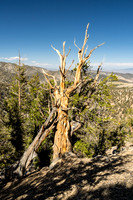
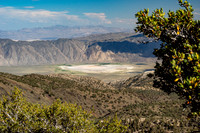
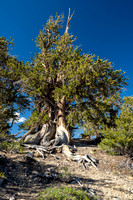
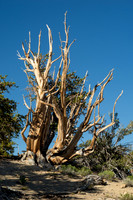
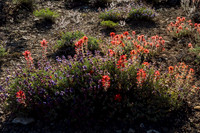
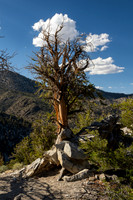
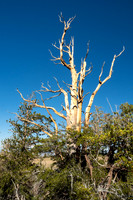
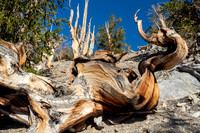
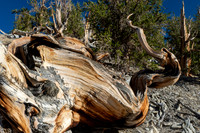
The Ancient Bristlecone Pine Forest of California’s White Mountains protect the oldest living non-clonal organisms on earth, surviving for thousands of years in an unforgiving environment. The high elevation, short growing season, forceful winds, and intense cold cause the trees to grow extremely slowly, producing dense resinous trunks that can withstand insects, disease, and decay. This slow growth leads to gnarly shapes, each tree with an individual character that has developed over hundreds and in some cases thousands of years, some still standing after nearly 5000 years. Because of the harsh conditions that thwarted decay, some of the dead trunks are even older, going back around 8000 years. There is almost no underbrush or other tree species growing on the hillsides, a result of the inhospitable climate and alkaline soil in which almost nothing else can grow. Nothing, that is, except wildflowers that can blanket the hillsides in mid-summer, producing a fantastic juxtaposition of ancient and fleeting beauty.
After driving about an hour and a half from our cottage, we spent time in the Ancient Bristlecone Pine Forest Visitor Center, learning from the impressive array of exhibits and enjoying a well-made video that provided a helpful understanding of the area and a history of the dendrochronology research that used findings from these ancient trees to refine carbon dating techniques. These refinements allowed more accurate determination of the age of geological events such as the volcanic explosion of Santorini and the dates of archeological sites such as Stonehenge.
In the late afternoon we hiked the 4-mile Methuselah Loop trail, which took us through amazing stretches of bristlecone pines in the Sculpture Garden, the Mountain Mahagony Grove, and the renowned Methuselah Grove, which has a stunning collection of the world’s oldest trees, including the unmarked (for protection) Methuselah tree, with a germination date of 2833 BCE (over 4,800 years old!). Walking through this grove is truly humbling, a reminder that you are a tiny point on the timeline of these trees. At the same time, you feel a connection to the long arc of history, standing in the presence of living beings that have endured nearly as long as all of recorded human history. The cares and concerns that dominate our daily lives lose their importance, at least momentarily, as you consider the long march of time through the ages.

© Sustaining Images, All Rights Reserved