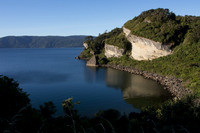
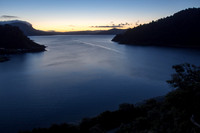
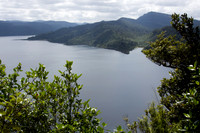
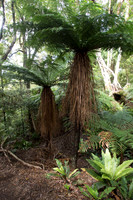
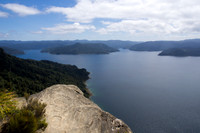
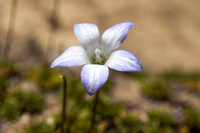
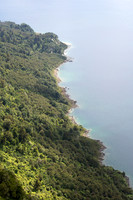
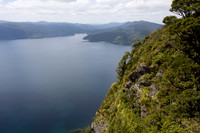
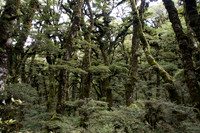
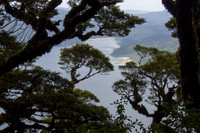
Lake Waikaremoana is located within the pristine native forest of Te Urewera National Park, one of the few areas of New Zealand that has never been logged. The lake was formed over 2000 years ago when an enormous landslide blocked a narrow gorge, resulting in the Waikaretaheke River backing up to flood a network of ancient valleys. The resulting lake is the largest and deepest on the North island, spreading out more than 54 square kilometres with a depth of up to 256 metres. The area is usually enveloped with cloud and mist throughout the year, giving the name “Children of the Mist” to the local Maori. If you listen carefully, you might hear the flutes and mischievous laughter of mythical fairy creatures called patupaiarehe, who have been known to spirit away the wives of Maori warriors. If not the fairies, you will certainly hear the many species of native birds that fill the forests: the melodic chimes and gurgles of the tui, the flittering of the playful fantail, the distinctive flutter of the kereru (wood pigeon), and the lullaby of the ruru, the native forest owl. At night you might be fortunate enough to hear the call of the kiwi, which is making a comeback from near extinction, thanks to the ceaseless efforts of the Department of Conservation and a local Maori conservation group to control the number of introduced predators such as possums.
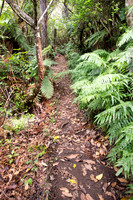
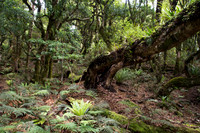
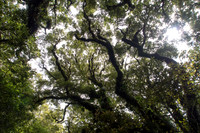
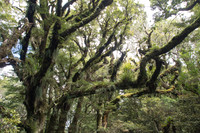
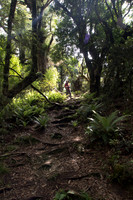
Over several days we were able to hike in the “Goblin Forest” near Panekiri Bluffs, beside the many small lakes of the Ruapani Circuit, and through the rainforest to Lake Waikareiti. We also completed a number of short walks near the Aniwaniwa Visitor Centre, including the Hinerau Walk, Aniwaniwa Falls Track, Papakorito Falls, Black Beech Walk, Tawa Walk, and Lou’s Lookout. We were clearly beneficiaries of the area’s isolation and the local Maori’s respect for their forests, mountains, rivers and lakes, which together have kept foresters and farmers away from Lake Waikaremoana, allowing today’s visitor to experience the remoteness that is so precious in the modern world.
Category:
Subcategory:
Subcategory Detail:
Keywords:
© Sustaining Images, All Rights Reserved