A UNESCO World Heritage site, Waterton Lakes National Park lies where the mountains and prairie meet in southwestern Alberta, and within the traditional territory of the Blackfoot Confederacy. An area of tall peaks and deep lakes, Waterton Lakes borders on Glacier National Park in the U.S. These neighboring parks are designated World Biosphere Reserves, preserving critical habitat that includes grasslands, mountains, freshwater lakes, aspen groves, alpine meadows, and deciduous and coniferous forests. The two parks together form the Waterton-Glacier International Peace Park. Parks Canada and the U.S. National Park Service respectively maintain government to government relations with local tribes, including the Blackfoot Confederacy and the Ktunaxa Nation in Canada, and the Blackfeet Tribe and the Confederated Salish and Kootenai Tribes in the United States.
Waterton Village, a small and low-key town that sits along Waterton Lake beneath Mt. Blakiston and Crandell Mountain, is the gateway to the park and where most park visitors stay. Waterton Lake stretches into Glacier National Park in the U.S., and there are boat trips that cross the border and make a stop at the Goat Haunt Ranger Station in Glacier. Many people have afternoon tea at the Prince of Wales Hotel, which sits on a promontory above town and offers spectacular views of the lake and mountain peaks.
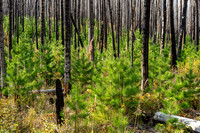
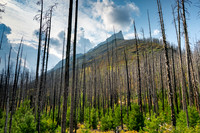
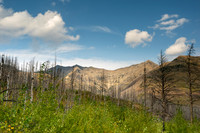
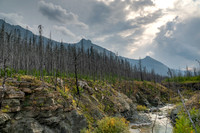
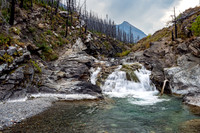
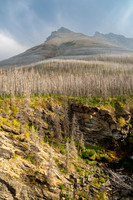
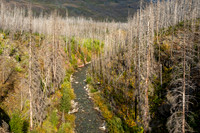
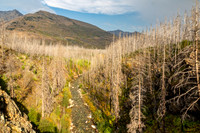
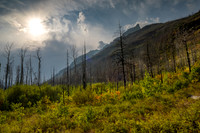
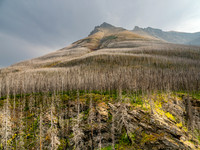
The September 2017 Kenow wildfire moved through Waterton Lakes National Park with exceptional intensity, burning nearly 20,000 hectares (50,000 acres, or 77 square miles) in six hours. Fortunately, the town and the Prince of Wales were saved through extraordinary efforts of firefighters, but the slopes of the mountains were completely devasted by the fires. Approximately 44% of the park's vegetated area was burned. Eight years later, forest rejuvenation is occurring in areas populated by aspen and lodgepole pine, but there is little to no tree regrowth in areas previously dominated by fir and spruce trees, which are not as adaptable to the effects of such intense wildfires. A hotter and drier climate is also affecting the ability of these areas to recover. In my photo galleries, the effects of the fire are clearly visible, and it is both encouraging to observe the recovery and devastating to see the damage from the fire. It will be many decades before the area recovers, but in the meantime, we can celebrate the power of nature to heal.
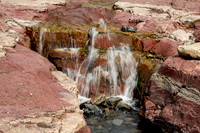
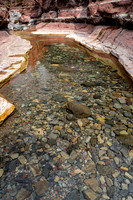
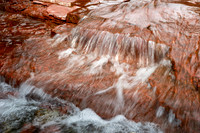
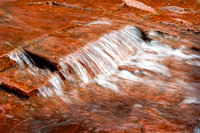
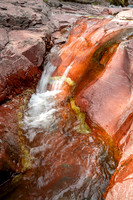
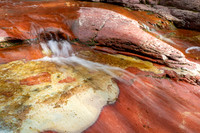
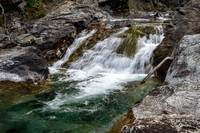
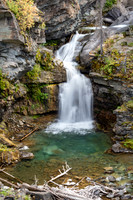
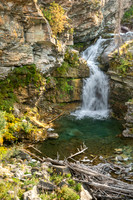
On our first day in Waterton Lakes we drove the Red Rock Parkway, which winds through the burnt forest to Red Rock Canyon and Blakiston Falls. In the late afternoon we stopped before the parkway starts its descent into the valley and enjoyed the afternoon light on Vimy Peak. After reaching the valley, we pulled into the parking lot for Middle Waterton Lake and found nice reflections of the mountain side on the calm surface of the water. Finally, we drove to the Prince of Wales Hotel and enjoyed the expansive sunset views of Waterton Lake lined with mountain peaks as it stretches south into Glacier National Park.
On the second day we drove the Akamina Parkway to Cameron Lake, before hiking to the Lower Rowe Lake. This trail starts out in a burned area that eventually transitions to an area that escaped the fire. Even though there was regrowth in the forest along the trail, the contrast with the unburned forest was stark. We went back to Cameron Lake for the late afternoon light before descending back to the valley and the village.
On our final day in Waterton Lakes, Bliss decided to take a break from hiking to give her knees time to recover. I decided to try the Crypt Lake hike, which National Geographic includes on their list of the 19 most thrilling hikes in the world. To reach the trailhead, you take a ferry across to the other side of Waterton Lake, which takes about 20 minutes. You must be back to the trailhead in time for the return ferry, as there is no other way across the lake. I joined with another person who was hiking alone, and we promised to make sure each of us stayed safe and made it back before the ferry departed. For most of the hike, it is a relatively straightforward but steep mountain path, going initially through the forest, past waterfalls, and across exposed rocky terrain. But the last part of the hike takes you through three challenging sections: first, you must cross a narrow, single-track trail cut across a precipitous mountainside; then you climb a vertical ladder and enter a 60-foot long dark tunnel where you shuffle and crawl carefully along, trying to avoid hitting your head, scraping your shoulders, or bumping your knees; and then after emerging from the other side of the tunnel and climbing down a short rock wall, you must make your way 75 feet across a rocky cliff with a steep drop-off while holding tightly to a steel cable anchored into the rock. It is not recommended for someone with a fear of heights! It’s a relief to finally reach Crypt Lake, which is a beautiful (and cold) alpine lake surrounded on three sides by steep mountains. Although I had hiked up the trail as fast as I could (and much faster than my usual pace), I was the last to arrive at the lake, not leaving much time to rest and have lunch before starting the trek back to the boat. My hiking mate stayed with me and gave me mental encouragement to climb back down the cabled section, back through the tunnel, down the ladder, and across the scree slope. It was definitely much easier going from there, and although we were the last to leave the lake, we made it back to the boat without a problem. After a 12-mile hike with 3000 ft of elevation gain (and corresponding elevation loss), I didn't have a lot left in the tank by the time we arrived safely back across the lake! I wasn't able to take much time for photos on this hike, and because of the need to keep moving, I missed several scenes I would normally have photographed. This was a challenging hike for me, pushing me in new ways, but it is an experience that will certainly stay with me. Thank you for coming along on this adventure!
We enjoyed our time in Waterton Lakes, and we appreciated the low-key feeling of both the village and the park overall. Seeing the burned areas and their slow recovery was both painful and hopeful, a good preview of what we will increasingly encounter as more areas are affected by wildfires. The future of most national parks is hotter and drier, and it is inevitable that large areas will burn (such as what happened closer to home earlier this summer on the north rim of the Grand Canyon). Hopefully, we will learn better fire prevention and management strategies from the original caretakers of these lands, and we’ll be able to maintain healthy landscapes for future generations to enjoy.