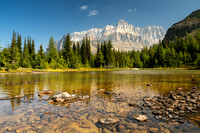
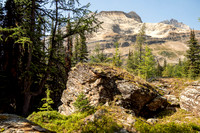
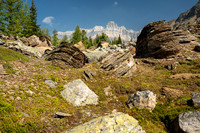
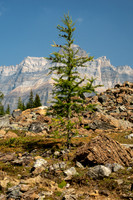
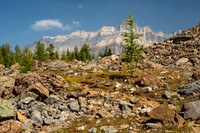
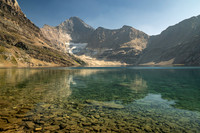
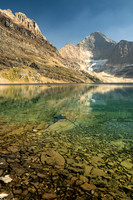
Lake O’Hara is a highly sensitive alpine environment with spectacular scenery. It is home to glacier-carved peaks, hanging valleys filled with alpine lakes, and a well-maintained trail system that takes hikers to stunning views. Located within Yoho National Park on the traditional territory of the Ktunaxa and Secwépemc peoples, it is considered the crown jewel of Canada’s national parks. Access is limited and tightly controlled by Parks Canada, protecting this fragile area for present and future generations. We were fortunate beneficiaries of an invitation to stay at Lake O’Hara Lodge, which offered us the opportunity to experience this unique and special place.
Our stay at Lake O’Hara was a visually intense sensory adventure. We were captivated by the immensity and splendor of the setting, with the beautiful emerald lake encircled by steep cliffs and towering mountain peaks. We felt both awe and humility in this grand landscape, where the sheer power of the mountains and the raw beauty of nature saturated our minds with unforgettable images.
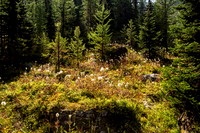
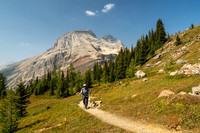
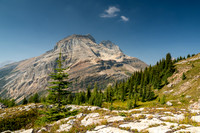
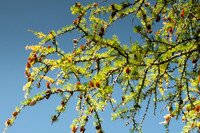
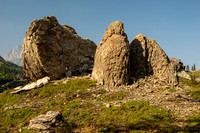
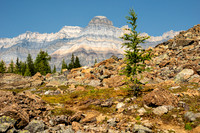
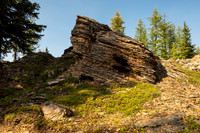
On the day of our arrival, we hiked to Lake McArthur, a beautiful alpine lake situated below high cliffs. The moderate loop took us into an alpine meadow, across a large rockpile, through a large larch forest, past a small lake (Schäffer Lake), through a field of huge boulders, over a mountain pass, and finally to our destination at Lake McArthur. The views were affected by smoke from northern Canadian wildfires that had drifted into the area, but this trek was a perfect introduction to the Lake O’Hara Basin.
The next day, we hiked to Lake Oesa via the Lake O’Hara Lakeshore trail. On our hike to the lake, we passed by a beautiful cascade and 3 small mountain lakes (Lake Yukness, Lake Victoria, and Lefroy Lake). We stayed for a long lunch by the shore of Lake Oesa, soaking in the views of the surrounding mountains before returning along the Yukness Ledges route (a section of the Lake O’Hara Alpine Circuit). This took us to the east side of the Opabin Plateau and down to Lake O’Hara Lakeshore trail. It was a long day (in part because of all the stops for photos), but the views were incredible along the entire route. Although the smoky haze moved in during the late afternoon, the morning was gorgeous, with sunny skies and beautiful clouds moving across the mountain peaks. This hike was the highlight of our stay at Lake O’Hara.
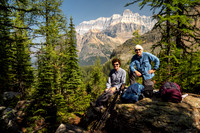
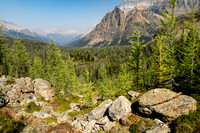
The following day we hiked the All Souls Prospect route, which is the third section of the Lake O’Hara Alpine Circuit. It was a tough hike/climb with several “sketchy” spots, but it took us to an expansive viewpoint before descending along a somewhat slippery scree slope and a boulder field to the west side of the Opabin Plateau. Climbing the All-Souls route was more difficult than we expected, but it felt good to have conquered this section of the Alpine loop! After reaching the Opabin Plateau, we took a side trip to the well-known Opabin Prospect, which offers commanding views over Lake O’Hara and into the distance. We had been quite slow in climbing the All Souls route, and by the time we reached Opabin Prospect it was late afternoon, and we had it to ourselves. Smoke from wildfires tempered the views, but it was a treat to relax peacefully on the ledges and enjoy our afternoon snack before heading down to the lodge for dinner.
On our final day, before taking the afternoon shuttle back to the parking lot, we hiked on the Opabin Plateau. A morning rain had freshened the trail and bathed the trees. Taking a counterclockwise route, we took the West Opabin route through a beautiful forest, continuing along the plateau by Cascade Lakes to Opabin Lake. We then looped around Hungabee Lake and across to the Opabin Highline Trail. We took the East Opabin Trail down to Lake O’Hara and back to the Lodge. Alas, the bus was waiting, bringing an end to our wonderful stay at Lake O’Hara.
I hope the gallery provides a good representation of the grandeur of Lake O’Hara. Although many of the classic views were dulled by the smoke hanging around the peaks and settling into the valleys, I believe you’ll see why we were so excited and grateful to be there.
We’re eager to return to Lake O’Hara, and hopefully we’ll have that privilege in the near future. In the meantime, we are carrying with us the mental stimulation and emotional energy from this incredible place, in addition to the indelible images that provide us with glimpses of our time there. Thank you for reading about our hikes and for viewing the photos.
Acknowledgements:
As we take in the beauty of natural wonders such as Lake O’Hara, I recognize that Indigenous Peoples were stewards of these lands for thousands of years before European colonization. Embedded in the scenery before me is a history of displacement, dispossession, and cultural loss. It is a complex history and a complex relationship between national parks and the people who lived for thousands of years in these lands prior to colonization. Parks Canada and Yoho National Park recognizes past and current Indigenous connections and are actively working together with Indigenous partners. Such collaborations are critical in both supporting reconciliation and reconnection to the land, and also in properly managing these precious lands and more effectively meeting the challenges of the climate crisis we are all facing.
We are grateful to the wonderful staff at Lake O’Hara Lodge for inviting us to stay in one of the lakeshore cabins. It was a very special and meaningful experience. The staff took really good care of us and helped us plan each day’s hike. Thank you everyone! We also met many kindred souls at Lake O’Hara, people who also had a strong connection with the natural world. It was a treat to share meals and evening conversations with new friends from Calgary and beyond.